Roleplaying games are all about spontaneity, and usually that's a good thing. A high-functioning group is able to improvise an experience that's much richer and more interesting than a pre-planned adventure packaged and run by a GM.
In dramatic play, this can be a problem, however. A lot of times, players will find themselves in a two-person scene where no one has a strong need to push for something right now. Sometimes this is out of a feeling that "it's too early" in the story for characters to have a big conflict, or out of an misguided sense that it's interesting just to place two characters in a scene together "just to see what happens". Usually, without a conflict, the answer to that question is "nothing".
Showing posts with label RPG theory. Show all posts
Showing posts with label RPG theory. Show all posts
Wednesday, 29 March 2017

Thursday, 3 November 2016
Hello Greyhawk, My Old Friend...

My 2016 reincarnation drama NOT FADE AWAY is wrapped up, at last, and that means I'm thinking about the next campaign I want to run. I generally have a lot of games in my back pocket as possibilities for "the next thing", but at the moment there's one idea that's taking up a lot of mental real estate. I've been wanting to run an old-school fantasy game for a while, using CASTLES & CRUSADES as my rules engine. It's modern, but with enough of the flavour of ADVANCED D&D, the formative game of my generation, that it captures something special in my imagination.
I want to use it to run Greyhawk.
Tuesday, 6 September 2016
Cascade

Last weekend we played MONSTER OF THE WEEK for the second week running. Various things have kept us from returning to NOT FADE AWAY, my Fate immortals game, but I had been feeling the itch to roll some dice and wanting to get back into it with something lighter in tone. We had a lot of fun playing MotW, which falls toward the crunchier, more traditional end of the Powered By The Apocalypse games, like DUNGEON WORLD. It also reminded me of something that was an issue when I ran DW for my online group last year. It's not a game-breaker, exactly, but something that I think bears consideration.
Wednesday, 6 July 2016
Bring the Thunder
A recent session at my table made me realize that a lot of players need to up their game, myself included.
We talk a lot in roleplaying circles about having "proactive" players who drive play, helping to move us away from a more traditional model where the players were reacting to stimuli introduced by the GM, or worse, where the players were looking to the GM to provide the evening's entertainment while they passively follow along.
At our table, play is focused on the player characters and what they decide to do, and often, what their interactions with each other look like. This is a fine model for dramatic play, and I often think of myself as GM as providing more of a "moving scrim" for those elements -- a colourful backdrop, but ultimately just set dressing for the really important moments. Sometimes I apply a little pressure here and there, creating situations where player character conflicts can be brought into sharp focus. Since players at our table often call for their own scenes, this is a responsibility that is shared by everyone who plays in our games.
Tuesday, 21 June 2016
Frequency
Last night we wrapped up THE FORKS, a Shadowrun campaign (powered by Fate) that I've been running about once a month since last fall. The last session was entirely satisfactory, with lots of heart-wrenching moments, although I felt that I wasn't able to push the players as hard as I would have liked in the climactic battle. Part of that was down to a truly spooky run of bad dice rolls (I don't think I got a roll that was higher than 0 all night long), although I felt like as a Fate veteran I should have this stuff figured out by now.
THE FORKS was a gritty crime drama take on Shadowrun, stripped of its usual excesses of glittering tech, heaps of cash, and action movie assaults on corporate strongholds. This was set on the mean streets of The Barrio, a desperate slum in the dustbowl sprawl that London, Ontario has turned into in 2050. Since there seemed to be no canonical drama in the region, according to the Shadowrun wiki, I decided that turning Ontario's agricultural heartland into a dusty wasteland ruined by agricorps gave it a nice Mad Max/Dirty Thirties vibe that would feel different than the Seattle Sprawl game I ran a few years ago. A lot of it focused on two of the three main characters fighting for the affections of Morning Glory, an exotic dancer who was also the obsession of a local Mob boss. As expected, with three female lead characters, it also became a story about the place of women in the Shadowrun universe, and I made sure to include as many female supporting characters as allies and enemies as possible.
THE FORKS was a gritty crime drama take on Shadowrun, stripped of its usual excesses of glittering tech, heaps of cash, and action movie assaults on corporate strongholds. This was set on the mean streets of The Barrio, a desperate slum in the dustbowl sprawl that London, Ontario has turned into in 2050. Since there seemed to be no canonical drama in the region, according to the Shadowrun wiki, I decided that turning Ontario's agricultural heartland into a dusty wasteland ruined by agricorps gave it a nice Mad Max/Dirty Thirties vibe that would feel different than the Seattle Sprawl game I ran a few years ago. A lot of it focused on two of the three main characters fighting for the affections of Morning Glory, an exotic dancer who was also the obsession of a local Mob boss. As expected, with three female lead characters, it also became a story about the place of women in the Shadowrun universe, and I made sure to include as many female supporting characters as allies and enemies as possible.
Monday, 30 May 2016
Agency
I was thinking about this topic because it's a foundation issue for good GMing, and for good roleplaying in general. Agency is one of those bits that gets tangled up with a lot of other things. It's small when you give it a passing glance, but the more you look at it, the more important it becomes. If you're really rocking a game, you can weaponize agency into a powerful tool - and indeed, a lot of modern games do exactly this.
Agency is, put simply, the power that is shared amongst players at the table to create the ongoing narrative of the game. In the traditional gaming world, much of this lives at the level of the player character and how it interacts with the rules. The more accomplished the character becomes, the more mechanical advantages it has to affect the world of the game, mostly in the realm of combat, but often in less obvious or flashy ways. Agency also lives at the level of social contract in a game - unless the rules explicitly define what power players have (assuming a model where there's a GM at all), the GM decides where the players can make contributions. This may include players inventing world details as part of character building, such as important NPCs, or including backstory that is explicitly designed to be part of play.
Agency is, put simply, the power that is shared amongst players at the table to create the ongoing narrative of the game. In the traditional gaming world, much of this lives at the level of the player character and how it interacts with the rules. The more accomplished the character becomes, the more mechanical advantages it has to affect the world of the game, mostly in the realm of combat, but often in less obvious or flashy ways. Agency also lives at the level of social contract in a game - unless the rules explicitly define what power players have (assuming a model where there's a GM at all), the GM decides where the players can make contributions. This may include players inventing world details as part of character building, such as important NPCs, or including backstory that is explicitly designed to be part of play.
Tuesday, 24 May 2016
After-Action Report: NOT FADE AWAY
We just finished the 7th session of NOT FADE AWAY, the Fate Accelerated campaign I've been running since February. The game is about immortals, or rather about beings called Pilgrims who are serially reincarnated with the same memories to carry on an eternal battle against their shape-changing enemies, the Rakshasa. It's what Highlander would look like if the immortals were genderfluid beings who spent as much time bickering as they did swordfighting.
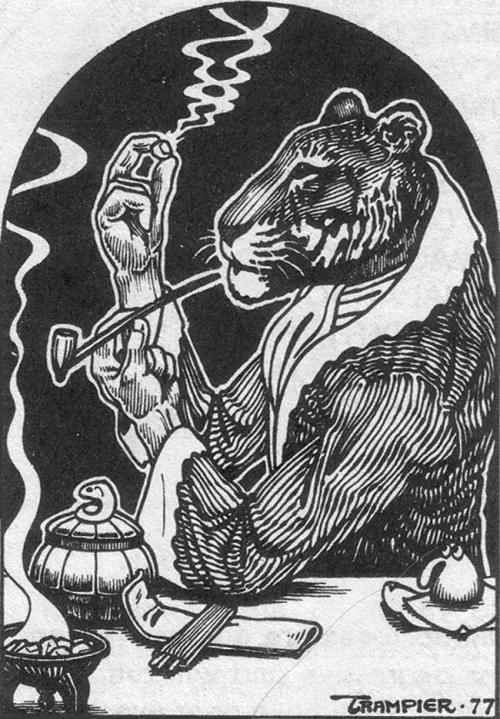 |
| So far, no anthropomorphic tigers in smoking jackets. Alas. |
Thursday, 19 May 2016
The Long and the Short
There are undercurrents swirling below the surface of the roleplaying hobby, invisible to the eye, but powerful enough that they affect just about everything we do. These are the mostly unspoken core assumptions about what our hobby is and how it is pursued at tables around the world. Roleplayers gather in small groups, negotiating acceptable conduct and proper play style, and rarely question the idea that their particular orthodoxy is one of many.
Once in a while that you get two gamers together talking, sharing stories, and realize that this is not the case at all. What is this other person talking about, we wonder? 'Cause it's sure not gaming. We have A Way Of Doing Things, and that's the only right and proper way. This guy's weird.
Thursday, 24 March 2016
Darkness and Light
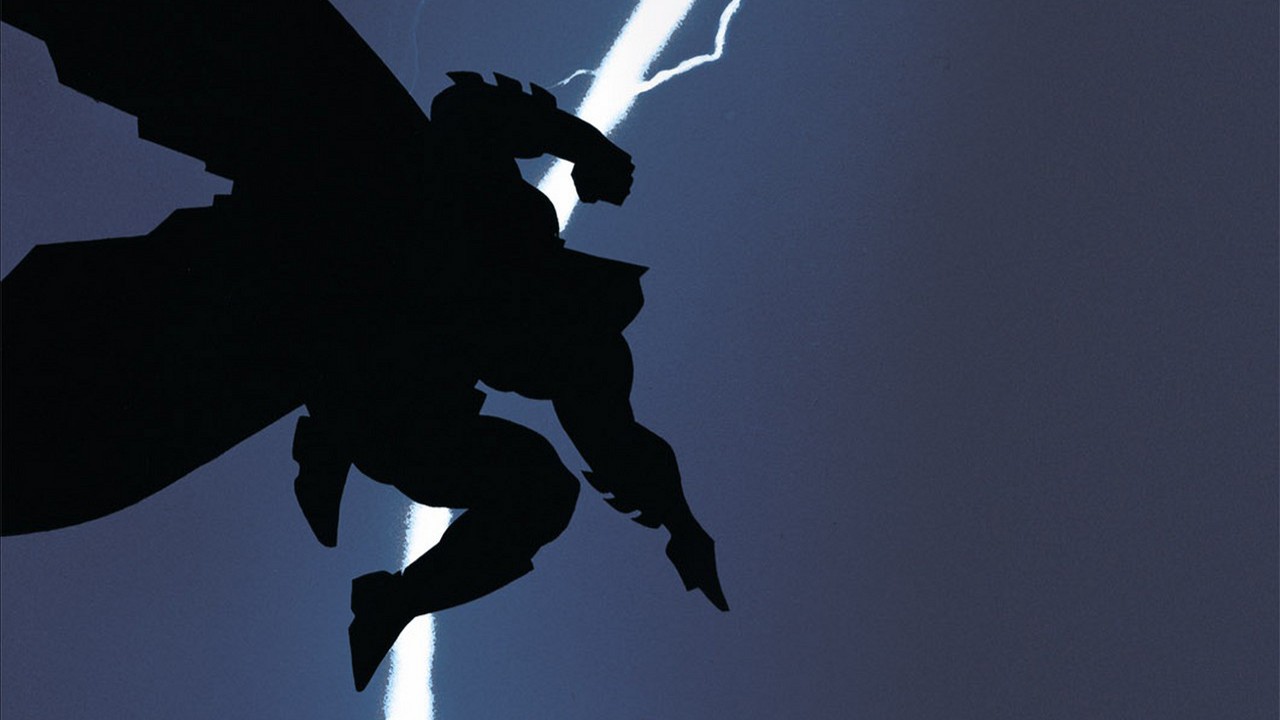 |
| Frank Miller's iconic cover for Batman: The Dark Knight Returns #1 |
But around the mid-point of the 1980s, there was a darkness gathering in the comic book world.
Monday, 21 March 2016
Tuesday, 8 March 2016
Can't Get Enough of Your "Special" Moves, Babe
Mr. White, a little mood music if you would?
Aww yeah.
Now, where were we? Oh yes. APOCALYPSE WORLD.
I've written before about the provocative nature of Vincent Baker's great roleplaying game, which recently ran a successful Kickstarter to fund a second edition and return to print. It's the kind of game that was designed to shake people up, change the way they do and think about things inside the parochial little world of roleplaying. As a long time GM, the way the game framed the role of the "MC" initially scared the living shit out of me. Or, more accurately, made me deny its usefulness, then angry, then depressed (because it felt like an attack on GMs), then eventually a cautious return to grapple with its ideas and eventually accept them. The five stages of APOCALYPSE WORLD.
Aww yeah.
Now, where were we? Oh yes. APOCALYPSE WORLD.
I've written before about the provocative nature of Vincent Baker's great roleplaying game, which recently ran a successful Kickstarter to fund a second edition and return to print. It's the kind of game that was designed to shake people up, change the way they do and think about things inside the parochial little world of roleplaying. As a long time GM, the way the game framed the role of the "MC" initially scared the living shit out of me. Or, more accurately, made me deny its usefulness, then angry, then depressed (because it felt like an attack on GMs), then eventually a cautious return to grapple with its ideas and eventually accept them. The five stages of APOCALYPSE WORLD.
Friday, 19 February 2016
Prep
Ready, Freddie? The eternal question.
No matter what style of game you play, figuring out the proper amount of preparation required to run a session is not a trivial matter. Some modern games make it easier on you, providing you with tools to create a session on the fly or else making preparation unnecessary / verboten. The "powered by the Apocalypse" games require a certain amount of preparation early on, but for the most part GMing those games is about reacting dynamically to events as they unfold. That's a fine thing, and a good philosophical perspective on the GM role (that is, the GM's job is not to plan a story, it is to respond to the decisions the PCs make); it can be unnerving if you're not on the ball, though, because you don't have the security blanket of pages of notes to fall back on.
No matter what style of game you play, figuring out the proper amount of preparation required to run a session is not a trivial matter. Some modern games make it easier on you, providing you with tools to create a session on the fly or else making preparation unnecessary / verboten. The "powered by the Apocalypse" games require a certain amount of preparation early on, but for the most part GMing those games is about reacting dynamically to events as they unfold. That's a fine thing, and a good philosophical perspective on the GM role (that is, the GM's job is not to plan a story, it is to respond to the decisions the PCs make); it can be unnerving if you're not on the ball, though, because you don't have the security blanket of pages of notes to fall back on.
Monday, 25 January 2016
"The Horror! The Horror!"
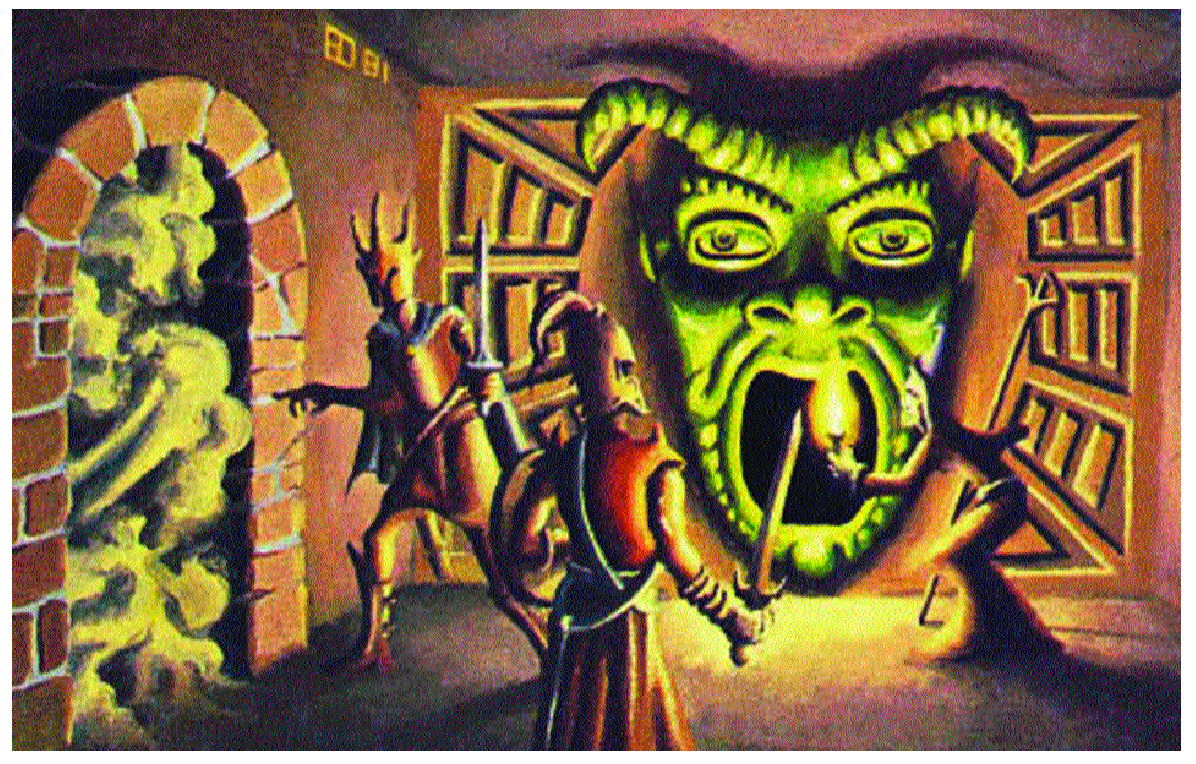
John Wick is one of those gaming industry personalities that always seems to be lighting fires wherever he goes. Recently, he wrote an article about one of the most infamous AD&D modules of the early days of roleplaying, THE TOMB OF HORRORS. Predictably, the gaming Internet imploded, or at least certain segments of it did. Here's one of the rebuttals. Make of it what you will.
Monday, 4 January 2016
Thomas Wolfe May Have Been On To Something
Fair warning: I’m
going to say some things about The Force Awakens here that you might not care for. If it would spoil your enjoyment of
that movie to hear criticism of it, do yourself a favour and skip this. I have
my problems with it, but I also have no interest in shitting on anyone else’s
fun.
I also have no interest
in discussing the merits and problems of The Force Awakens in the comment section below. Feel like
arguing about it? Take it somewhere else.
Nostalgia is the will-o-the-wisp lurking on the moors of
nerd culture. Unapologetic affection for the things we like is a fine thing,
but too often that leads you into the noxious bogs of sentimentality. It’s easy
to get lost there, losing sight of problematic content, giving things a free
pass just because we enjoyed them when we were young.
Friday, 20 November 2015
Presence
On Wednesday night, we played a long-delayed session of a new game I'm running: SHADOWRUN: THE FORKS. It's a once-a-month game with a group that isn't our usual players, a conscious attempt on my part to change up the dynamics and play games a little differently. It's a small group, which tends to lend itself well toward intimate play, and the players (GM excepted, of course) are all women. Women I know pretty well, but still. Different from the usual dynamics, which have tended toward gender parity for at least half the games I've played for the past few years.
Thursday, 29 October 2015
ComedySystem (Part Two)
Let's assume that our hypothetical ComedySystem is going to look a lot like DramaSystem through a different lens.
A lot of the character creation stuff would probably look the same as standard DramaSystem, with maybe a little tweak in the language here and there. Instead of a long-arc Desire that drives the characters, which probably isn't going to work in a setup that's essentially (static) situation comedy, we probably need each character to have a "Bit". That is, the part of the comedic glue they provide to the ensemble. Going back to our Brooklyn Nine Nine example, Boyle's primary function is as the loyal (even doting) sidekick to Jake, our cocky leading man, and by extension he's the nice guy who gets pushed around by pretty much everyone. We might call his Bit "Enthusiastic Pushover". Rosa might be a "Tough Girl with a Heart", Santiago is the "By the Book People Pleaser", and Captain Holt is the "Incredibly Serious Commanding Officer".
A lot of the character creation stuff would probably look the same as standard DramaSystem, with maybe a little tweak in the language here and there. Instead of a long-arc Desire that drives the characters, which probably isn't going to work in a setup that's essentially (static) situation comedy, we probably need each character to have a "Bit". That is, the part of the comedic glue they provide to the ensemble. Going back to our Brooklyn Nine Nine example, Boyle's primary function is as the loyal (even doting) sidekick to Jake, our cocky leading man, and by extension he's the nice guy who gets pushed around by pretty much everyone. We might call his Bit "Enthusiastic Pushover". Rosa might be a "Tough Girl with a Heart", Santiago is the "By the Book People Pleaser", and Captain Holt is the "Incredibly Serious Commanding Officer".
Thursday, 22 October 2015
ComedySystem (Part One)
Yeah, it's been a while. The last month or so I've been heavily invested in the Canadian election, which took a toll on my mental health, but at long last it's over. Our shithead government of the last decade is no more, and a handsome new government has taken its place. We'll see whether they live up to the hype.
But let's get back to talking about some games, shall we?
I've recently been going through a phase where I've been thinking about future games to run again, some of which have started to gel in ways that I know will lead to good gaming. Something I've had a real hunger for is to run something from my bucket list: a straight-up comedy game. There are lighter games, where the joking is part of the fun, and games where jokes help to defuse the tension, but playing a comedy game where comedy is the intention of play can be a hard sell with players. Sure, they say, we make jokes all the time during game play, but setting out to tell jokes and make each other laugh? That's doomed to failure!
But let's get back to talking about some games, shall we?
I've recently been going through a phase where I've been thinking about future games to run again, some of which have started to gel in ways that I know will lead to good gaming. Something I've had a real hunger for is to run something from my bucket list: a straight-up comedy game. There are lighter games, where the joking is part of the fun, and games where jokes help to defuse the tension, but playing a comedy game where comedy is the intention of play can be a hard sell with players. Sure, they say, we make jokes all the time during game play, but setting out to tell jokes and make each other laugh? That's doomed to failure!
Wednesday, 15 July 2015
Foundations
Every once in a while, it's important to go back to the formative ideas that shaped your thinking, just to keep them fresh and vital in your mind. I realized it had been a while since I'd talked about the ideas that bubble under the surface of our play style, and that maybe it was time to return to that well for a bit. If you haven't read some of my earlier stuff on the High Trust, High Drama style, this will tell you how we got there.
I grew up playing first edition Dungeons & Dragons, or Advanced Dungeons & Dragons, as we called it back in the day, and over the course of the next twenty years played a lot of traditional roleplaying games. In my thirties, I began to feel like the old style games weren't giving me the same thrill any more. I wanted more than I was getting from the likes of D&D 3rd Edition (and the many d20 games that budded off from it). As an adult gamer, my time was limited. I needed to make sure that our play time was as rewarding as possible.
I grew up playing first edition Dungeons & Dragons, or Advanced Dungeons & Dragons, as we called it back in the day, and over the course of the next twenty years played a lot of traditional roleplaying games. In my thirties, I began to feel like the old style games weren't giving me the same thrill any more. I wanted more than I was getting from the likes of D&D 3rd Edition (and the many d20 games that budded off from it). As an adult gamer, my time was limited. I needed to make sure that our play time was as rewarding as possible.
Tuesday, 23 June 2015
A BLUE ROSE By Any Other Name...
I don't usually do this, but today I'm writing to tell you about a new roleplaying game I'd really like to see more support for. It's currently Kickstarting, although if you've been in the hobby long enough you may remember the first edition.
The game is BLUE ROSE, from Steve Kenson and the good folks at Green Ronin Publishing. And it's an important game, folks, in an industry that is often clannish and slow to change.
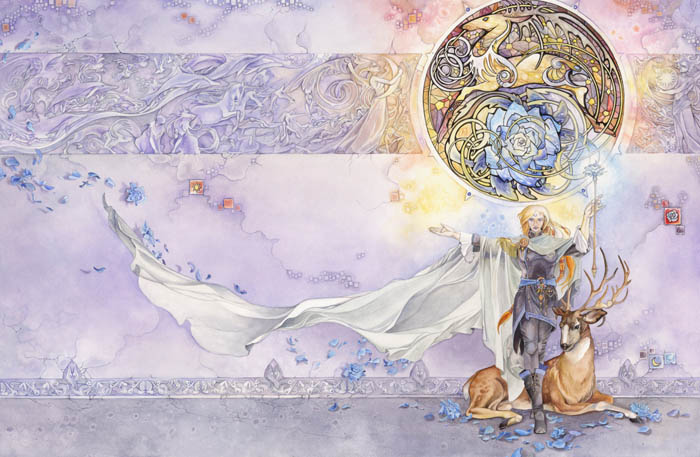 |
| Cover image by Stephanie Law from the original Blue Rose paperback. |
Tuesday, 19 May 2015
The Sound of Music
Just try and remove from your brain the
image of a plump, bearded man in a dirndl spinning around, Julie Andrews style,
in the meadows below a soaring mountain. You’re
welcome.
Music has been a big part of my games
for a long time. I’ve been a big believer in playing music in the background
since I was spinning Tangerine Dream CDs during high school dungeon crawls,
although I’ve not used it quite as much the past few years. These days I’m more
of a believer in playing the right tune at the right moment, to underscore
something that’s going on in a scene, rather than as wall-to-wall carpeting.
Not that atmospheric background music doesn’t still have a place, particularly
in genres like horror where it can really help set the mood. Even soft music that
strikes the right note can do something to players, setting them on edge
in a scary game, or underscoring the wonder and awe in a scene of fantasy.
Subscribe to:
Posts (Atom)