I was talking with friend recently, one who's often been part of the best games I've run / participated in over the past few years. She was grappling with something that I think a number of gamers struggle with from time to time, on both sides of the screen, feeling the lack of challenge in her gaming life.
We all fall into our comfortable little ruts in the hobby. As a GM, we pick a particular game, or a genre, or a style of play that suits us and our players, and we keep on keepin' on. As a player, it might be a focus on a particular type of character that we keep coming back to or playing different riffs on. For some people, that's all they want out of their gaming life: the same thing that's given them pleasure and escape for many years continuing in exactly the same manner, sometimes without even the intrusion of a new rules edition to rock the boat.
And there's zero wrong with that. Pepperoni pizza is like that: even if it's not spectacular, it's still pretty good. There are very few pieces of pepperoni pizza I've walked away from feeling disappointed or filled with malaise. And sometimes what you want is the old standby.
For those of us who try to push things, sometimes it's the opposite problem: obsession with novelty. You're always looking for the shiny new thing, the new rule set, the untapped genre or character concept, the twist that will give it extra zing like a splash of sriracha on your pepperoni slice. Novelty often ends up disappointing you in the end, because few games really deliver on the promise of a new experience that's fully satisfying. Often, they have a few good ideas that are fun for a while, then become small footnotes in the accumulation of a roleplaying style.
I'm talking about deeper challenges than this sort of thing, and real challenges involve a not-inconsiderable about of soul-searching.
For a player, you have to look at your previous characters and be able to critically assess them. Why were you attracted to that character type in the first place? How did it change over play? Is there something in particular that worked, or gave you particular pleasure/satisfaction in the development of that character? What didn't work, or what things were you trying for but didn't quite stick the landing? Was there something you wanted out of the character that you veered away from in play, either because you changed your characterization in play (perhaps only to fit the game as it evolved) or because you backed away from it?
And if the character was a "type" that you come back to, again and again, why? I have a tendency to like playing both soulful tough guys and wily, philandering sneaks. I think the former is perhaps a wish-fulfillment version of myself -- everybody likes to imagine they're a classic movie hero like John Wayne or Clint Eastwood -- and the latter is a wish to be something opposite to myself. I think it's totally true that a lot of players gravitate toward certain kinds of characters to work out or explore something they can't in their day-to-day lives. If you're big and clumsy, like me, it's fun to wear the skin of someone who's small, graceful, and stylish. If you have no outlet for anger and outrage, it's fun to be someone who gets right in people's faces and lets them have it.
If you know why you're returning to the same well again and again, it's easier to know what you get out of that experience at the table and perhaps chart a different course with a new character. Maybe you figure out an angle on that "type" you've never played before, or deliberately take something opposite to your "usual" to get away from familiar things.
What were your best moments as a player? You know the ones, the character moments that still thrill you to think about them. The stories you tell again and again.
What moments fell flat?
Often, character emerges most tellingly in the deep interactions you have with other players. If you develop a character with another player in mind, as an important relationship with your character, you're going to have someone to play off of and apply pressure to you from different angles, or support you when you're backing away from the challenge that you set yourself. Open and frank conversations with your GM and the group early on can help with this too -- if the GM, in particular, knows what you're trying to get out of the game, they can provide the adversity and support you need directly.
The GM may be looking for different kinds of challenges. One might be simply trying to nail down a genre or style that they haven't been completely satisfied with in the past, or adding a new flourish to their toolbox such as more improv, more collaboration, less authorial control. Maybe you're trying to make the jump from drama-heavy tabletop to full-on freeform or LARP play. Or you might be dealing with a different challenge, such as integrating a new player into the group, or re-setting after a long break.
The process is much the same. You need to look at what you've been doing recently, and ask yourself honestly what it is you've done well, what you've done poorly or could improve at, and most of all why you run the games you do? Is there a particular kind of thrill that you get from running horror games, or tense crime dramas, or sexy romances? What are the rewards you get out of that, and is there another angle on it you haven't been able to explore? Is it played out? Is there another genre or ruleset that could help you develop some aspect of your play?
One angle of the GM challenging themselves is to ask the same kinds of questions about your players. Do you have ideas for new material that could push their game in useful ways? How will your new game satisfy their appetites as players, and how will it challenge their palates? Are there things that could improve the group as a whole, and give it new tools to work with, or is this game more about novelty and change for change's sake?
I think I'm pretty good at running games that have moments of high emotional intensity, whether that happens to be straight-up drama, high octane thrillers, or horror games. I'm most happy when my players are pushed right to the edge and can feel it crumbling underneath their feet. I could definitely do better at the mechanical parts of the gaming experience, and also at allowing my players greater latitude in pushing the game forward. Some of me will always be rooted in the "old school" way of thinking about games, where the GM is expected to entertain the players and bring a lot to the party in terms of prep and story. I have played long enough that I know the pleasures of arriving at the table with no idea what's going to happen, but I'm not convinced it's always the way to go.
What challenges have I got on my workbench? I'm interested in rehabilitating the idea of the comedy game, inasmuch as it's a genre that players seem to feel is slight or unrewarding. The current game idea I'm toying with is a bit of a Quentin Tarantino crime comedy set in the world of Ross Payton's Base Raiders. Silver Age superhero trappings meets colourful, possibly not that bright crooks engaged in high-stakes heists. I'd be borrowing broadly from both the trappings of the superhero genre and those of the Fiasco style crime-gone-horribly-awry. Marrying those two genres and finding both dramatic and comedic challenges for players is enough to keep my gears turning.
Sunday, 30 November 2014

Wednesday, 19 November 2014
Quick and Dirty: Hacking Fate Accelerated
Getting back into running Fate Accelerated again has me thinking of other ways I could use this game system. The Approaches are a nice broad way of talking about ways that you can have characters take action, and a quick re-skin could give you an easy "in" to create themes for a particular setting.
On the bus, the other day, my brain was wandering around the idea of what it would look like for running a game focused on Game of Thrones-style court intrigue, treachery, and knives sticking out of people's backs.
The Approaches might look something like this:
Calculating (Careful)
Canny (Quick)
Cocky (Flashy)
Covert (Sneaky)
Cruel (Forceful)
Cunning (Clever)
Why all the 'C' words? No particular reason except that there are a lot of splendid ones.
I've also been toying lately with the idea of pre-defined Consequences along the line of Conditions (as they appear in the Fate Toolkit). In a game like the above, you might have social Conditions like Embarrassed, Humiliated, and Disgraced.
If we were to do away with the Stress track altogether, things could get ugly fast, with a Success with Style leading to immediate humiliation.
And if I wanted to make violence as dangerous as possible? Have physical conditions, but make them Wounded, Maimed, and Deceased.
Note: I'm trying a few different things to keep me writing in this space on a more regular basis. You may see more Quick and Dirty pieces like this, and maybe things like game reviews as well. Any ideas or requests are welcome.
On the bus, the other day, my brain was wandering around the idea of what it would look like for running a game focused on Game of Thrones-style court intrigue, treachery, and knives sticking out of people's backs.
The Approaches might look something like this:
Calculating (Careful)
Canny (Quick)
Cocky (Flashy)
Covert (Sneaky)
Cruel (Forceful)
Cunning (Clever)
Why all the 'C' words? No particular reason except that there are a lot of splendid ones.
I've also been toying lately with the idea of pre-defined Consequences along the line of Conditions (as they appear in the Fate Toolkit). In a game like the above, you might have social Conditions like Embarrassed, Humiliated, and Disgraced.
If we were to do away with the Stress track altogether, things could get ugly fast, with a Success with Style leading to immediate humiliation.
And if I wanted to make violence as dangerous as possible? Have physical conditions, but make them Wounded, Maimed, and Deceased.
Note: I'm trying a few different things to keep me writing in this space on a more regular basis. You may see more Quick and Dirty pieces like this, and maybe things like game reviews as well. Any ideas or requests are welcome.
Tuesday, 18 November 2014
And On The Seventh Day, They Rolled The Dice...
This past weekend, I sat down to the first session with a new group of players, and we collectively created a setting for a game. The experience was very good, as it usually is, with all the players bringing a lot of fresh ideas to the table and the final game product feeling very charged with imagination and energy. I think we're all going to have a good time with this game, if the first session (which was brief, outside the discussions about setting and character creation, which always takes more time than you'd hope) is any indication.
Yesterday I was transcribing some of the material we developed into a more formal document for my own benefit, so that I could keep a lot of the details straight -- that can be tricky, if the GM isn't actually the expert on the setting that they might be in a more traditional model, or drawing from something published. You gotta keep the canonical stuff straight.
It made me reflect on the process of collective setting / character creation, which has been an important part of the HTHD style for the past few years. It has a lot of virtues to recommend it, and a few pitfalls, and it's worth being aware of them all before you dive face-first into a problem if you've never tried this.
The first, and maybe most important virtue to this sort of thing is that players will invariably bring a lot of wild and interesting ideas to the table if they're allowed to. The characters and world that emerged from our discussions yesterday was unusual and flavourful, full of weird, cool stuff such as fishlike humanoids who "swim" the spaceways and mine the sun, and living starships shaped like trees. There are strengths to playing games that constrain the kinds of character types that are available, limiting choices or arranging them by theme, but without someone to hold their hand and tell them that a setting is such-and-such, players bring the Flava.
Unusual settings are super-cool, because if there's one thing the world doesn't need, it's another vanilla fantasy game or Star Wars clone. This can be a fun journey of discovery for the GM, if they're willing to hold their contributions to the game very lightly and go with the flow of the discussion. It's a recipe for frustration if you've brought a bunch of your own ideas, or perhaps ideas that are too developed or structured, to a creation session like this -- you need to recognize that once you're into an open discussion of what the game is going to be, things will change and you may not get everything you wanted or imagined would be in it. And that's okay, as long as you get a few things you like. Everybody should get to contribute something, and the final result should be something that speaks to everyone. For myself, I didn't bring a whole lot to the table except a few loose story structures that might work for an SF game: Funky Space Gods. Space Rangers. Galactic Outlaws. The players liked Cosmic Rebellion.
The result of trusting your players enough to let them contribute fully to the creative end of game preparation is that you get yourself instant buy-in. Everyone should have roughly equal shares of investment in what you end up playing. This requires every player to share and be honest with each other, and hold their own ideas lightly (just as the GM does), so that everyone gets that sense of buy-in. Some players also fare less well than others at coming up with ideas out of the blue, so it may take a bit of gentle discussion to get them feeling comfortable and creative. Megan is rarely good at that sort of thing, but once she figures out a context for something she's good. She had an idea for a Star Dance-esque spacegoing humanoid, and I tossed her the idea of having tropical fish-like camouflage (which I borrowed from a recent viewing of Jodorowsky's Dune). Once she had that idea, the Sun Miners came together pretty neatly.
Another important pitfall to remember, and this goes for everyone but might have the largest importance from the GM's perspective, is that you need to be honest if things are moving in a direction you're not interested in. A friend tried to get a superhero game going last year and found herself in a tight spot when a major theme / story element of the game that emerged was something that she had no interest or investment in. GMs especially need to feel like the finished game is something they can run, so they need to make sure they're either getting stuff they connect with or steering discussion in productive directions (rather than saying No to specific ideas or shutting them down, which can kill the creativity).
I also think it's true that GMs need to be working with a rule system that supports what they're trying to do, and the more wide-open the discussion is going to be, the lighter and more flexible system you need to aim for. I was using Fate Accelerated, the lightest version of Fate I've got, which was just about in the sweet spot for rules weight. Collective creation would work fine for rules-almost-nonexistent games like Primetime Adventures or DramaSystem, or games whose rules model story without specific reference to setting requirements (like a lot of particular skills and trappings). You might be in for headaches if you were using a big toolkit like GURPS for something like this, if you left the gates wide open to different genre trappings (rather than limiting it to a sourcebook or two on hand).
Collective creation also feels like a great thing to do for a group that's still getting to know one another. It's a good trust builder, and lets everyone know implicitly that the table is going to share and value each other's ideas.
Yesterday I was transcribing some of the material we developed into a more formal document for my own benefit, so that I could keep a lot of the details straight -- that can be tricky, if the GM isn't actually the expert on the setting that they might be in a more traditional model, or drawing from something published. You gotta keep the canonical stuff straight.
It made me reflect on the process of collective setting / character creation, which has been an important part of the HTHD style for the past few years. It has a lot of virtues to recommend it, and a few pitfalls, and it's worth being aware of them all before you dive face-first into a problem if you've never tried this.
The first, and maybe most important virtue to this sort of thing is that players will invariably bring a lot of wild and interesting ideas to the table if they're allowed to. The characters and world that emerged from our discussions yesterday was unusual and flavourful, full of weird, cool stuff such as fishlike humanoids who "swim" the spaceways and mine the sun, and living starships shaped like trees. There are strengths to playing games that constrain the kinds of character types that are available, limiting choices or arranging them by theme, but without someone to hold their hand and tell them that a setting is such-and-such, players bring the Flava.
Unusual settings are super-cool, because if there's one thing the world doesn't need, it's another vanilla fantasy game or Star Wars clone. This can be a fun journey of discovery for the GM, if they're willing to hold their contributions to the game very lightly and go with the flow of the discussion. It's a recipe for frustration if you've brought a bunch of your own ideas, or perhaps ideas that are too developed or structured, to a creation session like this -- you need to recognize that once you're into an open discussion of what the game is going to be, things will change and you may not get everything you wanted or imagined would be in it. And that's okay, as long as you get a few things you like. Everybody should get to contribute something, and the final result should be something that speaks to everyone. For myself, I didn't bring a whole lot to the table except a few loose story structures that might work for an SF game: Funky Space Gods. Space Rangers. Galactic Outlaws. The players liked Cosmic Rebellion.
The result of trusting your players enough to let them contribute fully to the creative end of game preparation is that you get yourself instant buy-in. Everyone should have roughly equal shares of investment in what you end up playing. This requires every player to share and be honest with each other, and hold their own ideas lightly (just as the GM does), so that everyone gets that sense of buy-in. Some players also fare less well than others at coming up with ideas out of the blue, so it may take a bit of gentle discussion to get them feeling comfortable and creative. Megan is rarely good at that sort of thing, but once she figures out a context for something she's good. She had an idea for a Star Dance-esque spacegoing humanoid, and I tossed her the idea of having tropical fish-like camouflage (which I borrowed from a recent viewing of Jodorowsky's Dune). Once she had that idea, the Sun Miners came together pretty neatly.
Another important pitfall to remember, and this goes for everyone but might have the largest importance from the GM's perspective, is that you need to be honest if things are moving in a direction you're not interested in. A friend tried to get a superhero game going last year and found herself in a tight spot when a major theme / story element of the game that emerged was something that she had no interest or investment in. GMs especially need to feel like the finished game is something they can run, so they need to make sure they're either getting stuff they connect with or steering discussion in productive directions (rather than saying No to specific ideas or shutting them down, which can kill the creativity).
I also think it's true that GMs need to be working with a rule system that supports what they're trying to do, and the more wide-open the discussion is going to be, the lighter and more flexible system you need to aim for. I was using Fate Accelerated, the lightest version of Fate I've got, which was just about in the sweet spot for rules weight. Collective creation would work fine for rules-almost-nonexistent games like Primetime Adventures or DramaSystem, or games whose rules model story without specific reference to setting requirements (like a lot of particular skills and trappings). You might be in for headaches if you were using a big toolkit like GURPS for something like this, if you left the gates wide open to different genre trappings (rather than limiting it to a sourcebook or two on hand).
Collective creation also feels like a great thing to do for a group that's still getting to know one another. It's a good trust builder, and lets everyone know implicitly that the table is going to share and value each other's ideas.
Sunday, 26 October 2014
Changing the Stakes in Fate Combat
Fate is a terrific game system, one I've been strongly enamoured of since I first read Spirit of the Century many years back. A lot of things about it hit the sweet spot for me, especially the way it uses Aspects to highlight the most important part of a game, and also the way it explicitly gives the players a more authorial stance during gameplay. (The meta-thinking about the game that Fate encourages is an irritant to some players, but those guys wouldn't be interested in this post anyway - carry on.)
If there's one thing I'm not crazy about in Fate, it's the conflict system. Not that it's bad at doing what it's designed to -- to the contrary, it perfectly models the interactions of "competent, proactive" characters it's supposed to. Characters slugging it out are supposed to be important and capable -- otherwise, they'd be mooks. That's well and good, but sometimes Fate conflict tends to drag on long past the time that me and my players are having fun with it. Sometimes you just want to roll some dice, trade a few blows, and move on to more dramatic things.
In last year's playtest game of Tianxia, we found a comfortable middle-ground method of dealing with "named character" conflicts without the marathon. (I remember tossing this idea out myself, but my players may remember it differently. Whoever came up with it, I think it's a good idea worth repeating.) Instead of the usual trading-blows-until-someone-drops-or-offers-a-Concession rhythm of Fate conflicts, which admittedly would be less of an issue if my players were inclined to offer Concessions, we changed the conflict into more of a Contest. Best of three rolls won the whole fight.
This allowed the players to "go hard" for a few exchanges, spending Fate points and leveraging Aspects to hit as hard as possible, with a specific finish line in sight. This was particularly useful for Tianxia, because the conflict might have been prolonged by players trying to find each other's vulnerable points (as that game features different martial arts styles which interact in complex ways).
As in a regular Contest, this worked because in the player-vs.-player situation that was unfolding, neither player was especially interested in inflicting lasting harm on the other's character -- the confict was perhaps required by the story and the history between the characters, but it wasn't really about beating someone's face in. In a typical Conflict, however, the situation is a little more pointed. Characters go into Conflicts wanting to hurt the other guy and leave a few bruises, at least.
An idea I'm mulling over to use this model in more typical Conflict situations where satisfying honor might not be enough is to bring an element of wagering into it: Stakes. That is, the players decide before they begin the exchange what the Stakes for the battle will be -- are they fighting until someone walks away with a short-term Consequence, or something more lasting? This need not be a physical Consequence, as someone taking strictly defensive actions to win might leave someone with the Consequence "Humiliated and Outmatched" if they weren't able to overcome their opponent.
The Stakes would be based on the severity of the Consequence, or perhaps of the Condition inflicted by a loss. Since agreeing to this style of Conflict resolution would include a tacit agreement to accept that the winner of the best of three or five (or whatever, flavour to taste) exchanges would win the combat and the other character would effectively be Taken Out, Fate Points would be given to the loser as though they had agreed to a Concession. The Concession in this case would be built right into the terms of the Conflict.
I got to thinking about this while reading through the Fate System toolkit by Rob Donoghue and the gang, and mulling over the Conditions rules as a way of streamlining Consequences in a Fate build. I'm in favour of sleeking down Conflict as much as possible, and would take out the Stress tracks as a means to go directly to the juicy Consequences/Conditions.
Fate Core (and particularly the Toolkit) is full of delicious bits that us tinkers can poke and play with to mod our own versions of the game that Fred and Rob built. If you don't already own it, you need to rectify that situation right now, mister.
If there's one thing I'm not crazy about in Fate, it's the conflict system. Not that it's bad at doing what it's designed to -- to the contrary, it perfectly models the interactions of "competent, proactive" characters it's supposed to. Characters slugging it out are supposed to be important and capable -- otherwise, they'd be mooks. That's well and good, but sometimes Fate conflict tends to drag on long past the time that me and my players are having fun with it. Sometimes you just want to roll some dice, trade a few blows, and move on to more dramatic things.
In last year's playtest game of Tianxia, we found a comfortable middle-ground method of dealing with "named character" conflicts without the marathon. (I remember tossing this idea out myself, but my players may remember it differently. Whoever came up with it, I think it's a good idea worth repeating.) Instead of the usual trading-blows-until-someone-drops-or-offers-a-Concession rhythm of Fate conflicts, which admittedly would be less of an issue if my players were inclined to offer Concessions, we changed the conflict into more of a Contest. Best of three rolls won the whole fight.
This allowed the players to "go hard" for a few exchanges, spending Fate points and leveraging Aspects to hit as hard as possible, with a specific finish line in sight. This was particularly useful for Tianxia, because the conflict might have been prolonged by players trying to find each other's vulnerable points (as that game features different martial arts styles which interact in complex ways).
As in a regular Contest, this worked because in the player-vs.-player situation that was unfolding, neither player was especially interested in inflicting lasting harm on the other's character -- the confict was perhaps required by the story and the history between the characters, but it wasn't really about beating someone's face in. In a typical Conflict, however, the situation is a little more pointed. Characters go into Conflicts wanting to hurt the other guy and leave a few bruises, at least.
An idea I'm mulling over to use this model in more typical Conflict situations where satisfying honor might not be enough is to bring an element of wagering into it: Stakes. That is, the players decide before they begin the exchange what the Stakes for the battle will be -- are they fighting until someone walks away with a short-term Consequence, or something more lasting? This need not be a physical Consequence, as someone taking strictly defensive actions to win might leave someone with the Consequence "Humiliated and Outmatched" if they weren't able to overcome their opponent.
The Stakes would be based on the severity of the Consequence, or perhaps of the Condition inflicted by a loss. Since agreeing to this style of Conflict resolution would include a tacit agreement to accept that the winner of the best of three or five (or whatever, flavour to taste) exchanges would win the combat and the other character would effectively be Taken Out, Fate Points would be given to the loser as though they had agreed to a Concession. The Concession in this case would be built right into the terms of the Conflict.
I got to thinking about this while reading through the Fate System toolkit by Rob Donoghue and the gang, and mulling over the Conditions rules as a way of streamlining Consequences in a Fate build. I'm in favour of sleeking down Conflict as much as possible, and would take out the Stress tracks as a means to go directly to the juicy Consequences/Conditions.
Fate Core (and particularly the Toolkit) is full of delicious bits that us tinkers can poke and play with to mod our own versions of the game that Fred and Rob built. If you don't already own it, you need to rectify that situation right now, mister.
Thursday, 2 October 2014
Build Your Own Apocalypse
I was literally hours away from running APOCALYPSE WORLD this summer when the group that would have played it flew apart. That was tough. I'd already invested a lot of time in preparing for that game - such as you can, in a game where you are expressly forbidden from preparing specific material for the first session - and all of that evaporated in a puff of changing schedules.
Well, why not make my loss your gain?
One of the few concrete things I could do to get ready for that first session that never happened was to write up a list of questions that I could ask the players during the first session, to get things rolling and begin collaborative worldbuilding during play. I think some of them are pretty good, and maybe they'll be useful to you if you're running your own Apocalypse World game or something similar.
Of course I wouldn't actually ask each character all of those questions, although some would probably get repeated. Asking them of the other characters would likely get the other players thinking about that question for themselves, however, and that's the important thing.
Well, why not make my loss your gain?
One of the few concrete things I could do to get ready for that first session that never happened was to write up a list of questions that I could ask the players during the first session, to get things rolling and begin collaborative worldbuilding during play. I think some of them are pretty good, and maybe they'll be useful to you if you're running your own Apocalypse World game or something similar.
- What does your living space look like?
- What small, personal object do you have in your living space that no one else knows about?
- What's the tallest object in the area?
- What does the sky look like today?
- What do you see when you open your mind to the Maelstrom?
- Who is the first person you see?
- Is there anyone you're close with? Anyone you love?
- Do you have any living family?
- Is there anyone out there that scares you or creeps you out?
- Is there anyone you hate or would like to hurt? Anyone you'd kill if you got the chance?
- What's the ugliest place in the area? The creepiest? The most dangerous?
- Where do you go to be alone?
- Do you have a secret place known only to you?
- Do you have many lovers? Anyone special? Anyone you want more from? Who turned you down?
- Who are you sleeping with now?
- Who's got your back when the shit hits the fan?
- Who do you trust to always tell you the truth, even if it hurts? Who lies to you for shits 'n' giggles?
- When was the first time you killed someone? Who? Did people look at you differently afterward? Are they scared of you?
- What's your group got going for it? You don't have everything, but you have a few things you need and you can barter for others.
- Who's the biggest wheel in the area?
- Who's willing to do anything to get in the game?
- Does your group have any rules or taboos?
- Who is the smartest or wisest person in the area?
- There's a place you have to go sometimes that's really dangerous and scary. You never want to go there, but you always have to. Where? Why?
- Does your group have any weird superstitions?
- Who was the last person to die? How?
- What do people say about you when they think you're not listening?
- What's the most beautiful or amazing thing in the area?
- What does it smell like here?
- Was there anyone in your life that made you genuinely feel loved? Who turned their back on you when you needed them?
- One of these motherfuckers stole something from you. What was it and what are you gonna do when you find out?
- Who taught you every important thing you know? What happened to them?
- Are there any families - with children - in your group? Have you ever thought you'd like to have kids?
- Is there someone you won't let yourself be alone with any more? Who and why?
- Where is the safest place in the area?
- What do you wear on your body - or mark yourself with - as personal style?
- What happens to those who don't follow the rules?
- Tell me a secret.
Of course I wouldn't actually ask each character all of those questions, although some would probably get repeated. Asking them of the other characters would likely get the other players thinking about that question for themselves, however, and that's the important thing.
Wednesday, 24 September 2014
The Little Engine That Could (?)
A few months ago, I wrote a couple of posts about the Apocalypse Engine / *World games, which I was devoting a great deal of thought to. Since then, I've tried to get a full-on game of APOCALYPSE WORLD going -- that group sputtered and flew apart like a Sopwith Camel augering into the French countryside after the Red Baron popped by -- and also started running DUNGEON WORLD for my online group. It's fair to say that this gaming system, or perhaps its semi-formalized style of play, continues to occupy my imagination.
 The online game has really just started, but so far we've had a lot of fun with it. Although my original opinion of DW and many of the other games that have spun off from Vincent Baker's original game has not changed -- that they're not about something in the same way that AW and the excellent MONSTERHEARTS are about their subjects, merely applying a new ruleset to traditional procedural concerns -- I have to concede that DW works, and works well. Perhaps it is enough that it helps a group re-frame the experience of playing a vanilla fantasy game in the Old School style that us grognards rhapsodize. Certainly, I enjoyed the fact that it made me run a session a certain way, and encouraged me to adopt best practices behaviours in running even modest encounters. I'd say my players are sold on it.
I was taking a leisurely stroll through the playbooks for MONSTER OF THE WEEK last night. The game is a *World variant dedicated to monster hunting in the Buffy the Vampire Slayer / Supernatural mold, and looks pretty spiffy. It's already available, though I may wait a bit for the super-deluxe treatment it's going to get through Evil Hat Productions in print (and those guys know how to make great-looking books, I tellya what). There are a lot of great builds using this rules engine, big and small, published and fan-made. It speaks to the power of this style of play that so many people have embraced it and found ways to use it for Their Favourite Game.
Although I've so far resisted jumping on the Kickstarter bandwagon (and let's face it, it's because I have no cash), I was delighted to see a new *World game being pitched recently called Spirit of '77. This game could have emerged directly from my id, as it bears a more-than-passing resemblance to a campaign I ran a couple of years back called THE STRANGENAUTS. Basically, it's a high-action game that embraces a lot of the cultural tropes and imagery of the late 1970s. Although it looks like the basics of the Apocalypse Engine are the same here, the game constructs characters in a more do-it-yourself fashion that's pretty interesting, instead of the usual playbook ready to run.
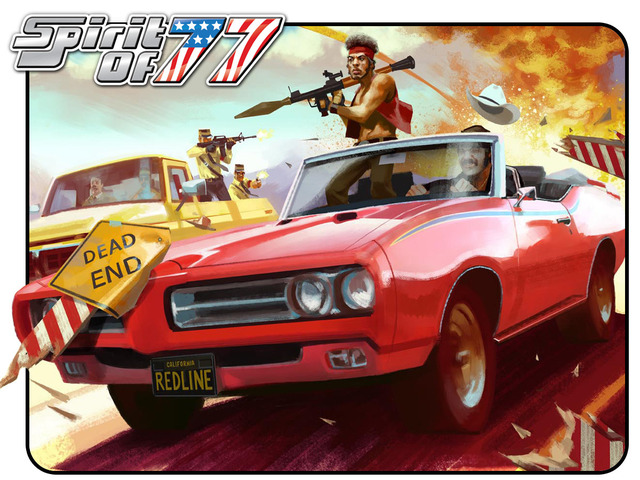 There's a pretty cool demo adventure here that has pretty much everything you need to play, including a pre-made character who bears a strong resemblance to Colonel Sanders. Also it has the Love Boat and zombies. Carry on.
Like I said, despite some re-skinning with awesome 70's style (the ranged attack move is called Smoke His Ass), most of the basics are the same in this game, but at the beginning of the demo the creators throw down what I think is a very interesting idea: that since the roll 2d6, 10+ is full success, 7-9 is partial success, and 6 or less is bad mojo rule structure of *World is the basic skeleton of the whole system, for those who want to play it super-loose, you could play a game using only that basic rule with nothing else.
Outta sight!
Of course, this is assuming (I think) that you're going to be adjudicating the game using something very like the principles and GM Moves that also exist in all of these games, or it would be a very slippery slope toward the same old problem of GM Fiat that *World is designed to avoid.
The idea is an attractive one, though. As a go-to system that requires very little prep, it could fit a lot of game groups well for nights when the regularly scheduled nerdfest doesn't come off for some reason. Just grab 2d6 and go. Players could just write down a few notes about their character -- possibly assigning bonuses and penalties to broad traits (which might end up looking like Fate style Aspects or PDQ Qualities) and be ready to play. Best of all, the very structure of the system means that a pick-up game would be driven by the players from the gitgo.
Has anybody out there tried this?

I was taking a leisurely stroll through the playbooks for MONSTER OF THE WEEK last night. The game is a *World variant dedicated to monster hunting in the Buffy the Vampire Slayer / Supernatural mold, and looks pretty spiffy. It's already available, though I may wait a bit for the super-deluxe treatment it's going to get through Evil Hat Productions in print (and those guys know how to make great-looking books, I tellya what). There are a lot of great builds using this rules engine, big and small, published and fan-made. It speaks to the power of this style of play that so many people have embraced it and found ways to use it for Their Favourite Game.
Although I've so far resisted jumping on the Kickstarter bandwagon (and let's face it, it's because I have no cash), I was delighted to see a new *World game being pitched recently called Spirit of '77. This game could have emerged directly from my id, as it bears a more-than-passing resemblance to a campaign I ran a couple of years back called THE STRANGENAUTS. Basically, it's a high-action game that embraces a lot of the cultural tropes and imagery of the late 1970s. Although it looks like the basics of the Apocalypse Engine are the same here, the game constructs characters in a more do-it-yourself fashion that's pretty interesting, instead of the usual playbook ready to run.
Like I said, despite some re-skinning with awesome 70's style (the ranged attack move is called Smoke His Ass), most of the basics are the same in this game, but at the beginning of the demo the creators throw down what I think is a very interesting idea: that since the roll 2d6, 10+ is full success, 7-9 is partial success, and 6 or less is bad mojo rule structure of *World is the basic skeleton of the whole system, for those who want to play it super-loose, you could play a game using only that basic rule with nothing else.
Outta sight!
Of course, this is assuming (I think) that you're going to be adjudicating the game using something very like the principles and GM Moves that also exist in all of these games, or it would be a very slippery slope toward the same old problem of GM Fiat that *World is designed to avoid.
The idea is an attractive one, though. As a go-to system that requires very little prep, it could fit a lot of game groups well for nights when the regularly scheduled nerdfest doesn't come off for some reason. Just grab 2d6 and go. Players could just write down a few notes about their character -- possibly assigning bonuses and penalties to broad traits (which might end up looking like Fate style Aspects or PDQ Qualities) and be ready to play. Best of all, the very structure of the system means that a pick-up game would be driven by the players from the gitgo.
Has anybody out there tried this?
Friday, 19 September 2014
Vox Populi

One of the big stories this week, of course, is the referendum on Scottish independence. As someone whose roots go back to Bonnie Scotland in days of yore, I have been following the story with some interest and strange mixed feelings. On the one hand, the idea of Scottish independence is exciting and exhilarating, even if it's something that the No side argued could lead to financial difficulty both for Scotland and the UK. In the end, the argument of the bankers and bean counters who stood to lose money on the prospect of an independent Scotland has prevailed. More's the pity.
On the other, I remember living through the Quebec 1995 referendum, and the whole Scottish adventure gave me weird flashbacks to that other democratic spin of the wheel and the dread I felt that Canada might be torn apart.
Like most things in life worth talking or writing about, it's complicated.
So what's all this got to do with that most democratic of art forms, roleplaying?
Like Scotland, the hobby seems full to bursting with factions that have a particular idea of what the proper way forward is. Some are full of passionate intensity, as Yeats would have it, fully prepared to declare certain parts of the hobby illegitimate or heretical. Sometimes the divisions are about when you came into the hobby, what games are acceptable, or how much certain groups are allowed to participate or make their mark on the culture at large.
The strange thing is that the deep divisions that occasionally stick their heads up in roleplaying seem to be about orthodoxy -- the idea that there is one particular way to play, one particular kind of player that is most welcome, one particular rule system that is right and others that are certainly wrong. One true way.
I say it's strange because the idea of orthodoxy runs entirely counter to the way roleplaying as a hobby actually functions, which is as a series of very small, democratic, independent units. In my experience, each individual group negotiates the proper rules of conduct and interprets the rules of the games they agree to play according to their personal preferences. If something isn't to their liking, they adjust it to taste, amending their play until the table is happy with the result. If players aren't satisfied, they vote with their feet and find another group that is closer to their preferences. What is anathema to one group (whether that means diceless play or using miniatures and battlemaps depends on the table) is ambrosia to another.
Where groups often run into problems is where things that they haven't talked about -- or maybe haven't talked about recently, as people's tastes change (or their tolerance grows thin) -- cause conflict. The ongoing discussion about what's allowed and what's not allowed is what modern groups call social contract. When there's a problem with social contract, things tend to escalate quickly. Gamers might see some surprising parallels with the smug, dismissive early tone of David Cameron's UK government turning into wheedling and bargaining in the later days of the campaign as the reality and determination of the independence movement began to sink in. The Group might break up over this!
Sure, for the hobby, there are fashions that come and go, and clannish divisions that emerge over a particular game (or edition, or game mechanic). There will always be loud dissent over various issues and gamers willing to shed their last hit point to defend a point of view that seems myopic and even childish. Time makes fools of them all, though. Yesterday's heresy is often over something that's become so common it's taken for granted by later generations of gamers.
In the meantime, a million tiny grassroots democracies continue to negotiate the borders of their tables. Like the Scottish referendum, social contract discussions are messy, loud, passionate affairs. They can strain friendships at times.
But the discussion is everything. The discussion lets us know that democracy and the collective good is alive and well, and everyone gets a vote.
Subscribe to:
Posts (Atom)