Monday, 25 July 2016

Spelunky and Roleplaying, or How I Learned to Stop Worrying And Always Get The Jetpack


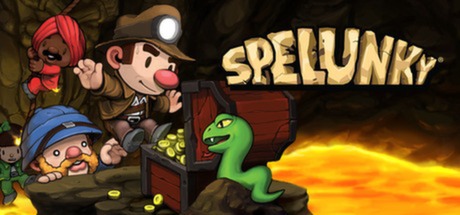
Last week, after a year and a half and many thousands of games, I finally beat Spelunky.

Just in case you've never played it, Spelunky is a video game that combines old-school, brutally unforgiving platforming with modern procedurally-generated design. If you grew up in the 1980s, just imagine one of those old timey games where you jump on monsters and try not to fall in pits, except that this game never has the same exact level layout.

Yes. You are right to shudder.

Thursday, 21 July 2016

Pokemon Go Home (Part Two)

Just in case you didn't already read the first part, that was a rant about how loud, judgemental, and awful nerd culture has become lately. You don't need to read it to understand this bit, but there was some fairly awesome swearing in it, if you like that kind of thing, and a message I wish more people were willing to hear. TLDR: Other people are allowed to like things that aren't for you. Let them.

So, what can roleplaying gamers learn from the worldwide phenomenon that is Pokemon Go?

Tuesday, 19 July 2016

Pokemon Go Home (Part One)


I will say this for nerds: they're consistent. 

Every so often, something new will come along that will cause a real sensation. In the 90s, it was Magic cards and vampire LARPs. As soon as that New Thing finds its audience and they're enjoying it, the assholes crawl out of their caves and go to work. This New Thing sucks, is stupid, is lame, and anyone who enjoys it (god forbid someone enjoy something that is not approved by the overcouncil of the Nerd Orthodoxy) is sucky, stupid, and lame too. 

Wednesday, 6 July 2016

Bring the Thunder

A recent session at my table made me realize that a lot of players need to up their game, myself included. 

We talk a lot in roleplaying circles about having "proactive" players who drive play, helping to move us away from a more traditional model where the players were reacting to stimuli introduced by the GM, or worse, where the players were looking to the GM to provide the evening's entertainment while they passively follow along. 

At our table, play is focused on the player characters and what they decide to do, and often, what their interactions with each other look like. This is a fine model for dramatic play, and I often think of myself as GM as providing more of a "moving scrim" for those elements -- a colourful backdrop, but ultimately just set dressing for the really important moments. Sometimes I apply a little pressure here and there, creating situations where player character conflicts can be brought into sharp focus. Since players at our table often call for their own scenes, this is a responsibility that is shared by everyone who plays in our games. 

Thursday, 23 June 2016

ShadowFate


I mentioned the other day that I'd just wrapped up a SHADOWRUN campaign that had been running for about ten months, The Forks. This is actually the second long-term SR game I've run in the past five years, and the second I've run with FATE. The first game, Disavowed, ran for longer and went a little deeper, and it ran long enough that I actually switched rules systems part way through. I started that game using SAVAGE WORLDS for the rules, and eventually ported it to FATE -- although it was based on the SPIRIT OF THE CENTURY incarnation of the rules, not the sleek modern iterations we have in 2016. I thought I'd talk a little bit about running SR using Fate and how it worked at the table, for those of you interested in such things.

Tuesday, 21 June 2016

Frequency

Last night we wrapped up THE FORKS, a Shadowrun campaign (powered by Fate) that I've been running about once a month since last fall. The last session was entirely satisfactory, with lots of heart-wrenching moments, although I felt that I wasn't able to push the players as hard as I would have liked in the climactic battle. Part of that was down to a truly spooky run of bad dice rolls (I don't think I got a roll that was higher than 0 all night long), although I felt like as a Fate veteran I should have this stuff figured out by now.

THE FORKS was a gritty crime drama take on Shadowrun, stripped of its usual excesses of glittering tech, heaps of cash, and action movie assaults on corporate strongholds. This was set on the mean streets of The Barrio, a desperate slum in the dustbowl sprawl that London, Ontario has turned into in 2050. Since there seemed to be no canonical drama in the region, according to the Shadowrun wiki, I decided that turning Ontario's agricultural heartland into a dusty wasteland ruined by agricorps gave it a nice Mad Max/Dirty Thirties vibe that would feel different than the Seattle Sprawl game I ran a few years ago. A lot of it focused on two of the three main characters fighting for the affections of Morning Glory, an exotic dancer who was also the obsession of a local Mob boss. As expected, with three female lead characters, it also became a story about the place of women in the Shadowrun universe, and I made sure to include as many female supporting characters as allies and enemies as possible.

Wednesday, 1 June 2016

Energized

We had a really great session last weekend, and we've been talking about it all week. Let me gush a little.

I've written here about NOT FADE AWAY, our ongoing saga of reincarnated heroes played out against the vast canvas of thousands of years of history. It's a game that we went into rebuilding the group, rebuilding trust and creating a new social contract, and also taking on a project that was crazily big and ambitious. Of all the games I pitched, this was the biggest and most difficult, and that's usually a good thing - you break new ground by being ambitious and doing hard things - but it's also been challenging. We're about at the 2/3 mark of the game now, and we're just beginning to hit our stride as a group. I've been happy enough with the game as it stands, and I think the players are too, but until you have a really breakout session where you see how good a game can really get, it feels hard. It feels like you're working toward something, and you can almost see it, but you're still struggling to get there.

We finally had that breakout moment.